The Leaderboard Illusion: What Slot Tournaments Are Really Selling You

Photo: online casino leaderboard competition tournament digital scoreboard, via s3.amazonaws.com
Somewhere along the way, spinning slots stopped being a purely solitary activity. Online casinos figured out that competition — even artificial competition — makes people play harder, longer, and with less attention to their bankroll. Enter the slot tournament: a timed leaderboard event where players race to accumulate the most points, biggest wins, or highest multipliers within a set window.
They're wildly popular. They're also one of the most sophisticated player retention tools the industry has ever invented.
That's not an accusation — it's a design history lesson. Understanding how these events evolved and why they work the way they do is genuinely useful for any player who wants to participate without getting played.
A Brief History of Competitive Slot Play
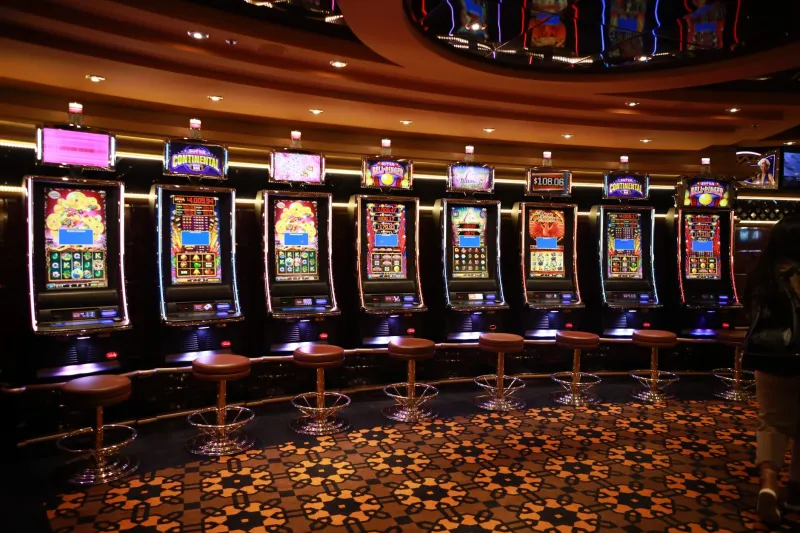
The concept of slot competitions didn't originate online. Land-based casinos in Las Vegas were running slot tournaments as far back as the 1980s, primarily as a marketing tool to fill seats during slow periods and reward loyal players with a structured event that felt like an experience rather than just another session at the machines.
The format was simple: players bought in, received a set number of credits, played a designated machine for a fixed time, and whoever accumulated the most credits won a prize pool. It was social, it had a clear endpoint, and it created a sense of occasion around what is normally a solitary activity.
Online casinos adopted the format in the early 2000s and immediately recognized its potential — not just as a special event, but as a permanent engagement mechanism. The leaderboard tournament, running continuously across days or weeks, became a fixture of the modern online casino experience. The mechanics evolved. The psychology got sharper.
How Modern Tournaments Actually Work
Today's online slot tournaments come in several flavors, but most share a common structure. Players earn points through gameplay — often tied to bet size, number of spins, or the size of individual wins. Points accumulate on a public leaderboard. Top finishers at the end of the event period win cash prizes, bonus credits, or free spins.
The "free entry" tournament is the most common hook. The casino promotes a zero-cost tournament entry, which is technically accurate. What the promotion doesn't emphasize: you still need to wager real money on the designated slot to earn any points. The entry is free. The fuel that powers your tournament run is not.
Paid-entry tournaments are more transparent. You pay a buy-in, receive a tournament credit allocation, and play against other entrants for a portion of the prize pool. The structure resembles a poker tournament more than a slot session, which appeals to players who want a defined risk and a competitive format.
Both formats have legitimate value. Both also have specific psychological pressure points that casinos understand very well.
The Psychological Mechanics of the Leaderboard
Here's what makes leaderboard tournaments so effective at extending play: they convert a solitary, math-based activity into a social competition with visible stakes and real-time feedback.
Seeing your name sitting in 47th place with two hours left in the tournament is not a neutral experience. It triggers competitive instincts that have nothing to do with the underlying probability of slot outcomes. The rational response — "my position on this leaderboard has no bearing on the mathematical fairness of these spins" — gets overwhelmed by something much more visceral: the desire to climb.
Casinos know this. Leaderboards are often designed to show you exactly how many points separate you from the next position above you. That gap feels closeable. It probably is closeable — with more spins. Which requires more bets.
Time pressure amplifies everything. Countdown timers, "final hours" notifications, and push alerts reminding you of your current rank are all designed to create urgency that bypasses deliberate decision-making. The same psychological mechanism that makes flash sales effective works here. Urgency shortcuts rational evaluation.
The Hidden Costs of "Free" Tournament Entries
Let's talk math. A free-entry tournament on a specific slot game might offer a $500 prize pool with 200 participants. The top 10 finishers win prizes ranging from $200 down to $10.
To be competitive, you need points. Points come from spins. Spins require bets. If the designated slot has a minimum bet of $0.50 and you spend two hours trying to climb the leaderboard — spinning at a rate of roughly 400 spins per hour at a moderate pace — you've wagered $400 for a shot at a prize pool where 190 out of 200 players win nothing.
The expected value of that $400 in tournament-driven wagering is no different from any other $400 session on that slot. The RTP doesn't change because there's a leaderboard. But your willingness to wager $400 in a single session might be very different when framed as tournament competition versus ordinary play.
That's the real product the tournament is selling: a reframe that makes extended, high-volume wagering feel purposeful and competitive rather than repetitive.
Playing Tournaments Responsibly Without Skipping Them Entirely
None of this means tournaments aren't worth playing. For the right player in the right mindset, they're a genuinely fun format that adds social texture to solo gaming. But going in with clear parameters matters.
Set a tournament budget before you start — not a session budget that you'll expand if you get close to the top. A hard tournament budget. When it's gone, your tournament is over regardless of the leaderboard.
Evaluate prize pool realism. If 200 players are entered and 10 win prizes, you have a 5% chance of winning anything. Does the potential prize justify your planned spend at those odds? Run the numbers before the timer starts.
Ignore the leaderboard during play. Seriously. Check it once at the start and once at the end. Watching your rank in real time is exactly what the interface is designed to make you do — and it's exactly what drives irrational escalation.
Treat paid-entry tournaments as the more transparent option. You know your maximum exposure upfront. Free-entry tournaments with unlimited wagering potential are structurally harder to budget for.
The Competition Is Real — But So Is the Design
Slot tournaments are a product of smart marketing, behavioral psychology, and genuine player demand for something beyond the standard solo session. They've earned their place in online gaming culture — they're fun, they create community, and yes, people do win meaningful prizes.
But the leaderboard is never just a leaderboard. It's a mechanism. Understanding what it's built to do is the first step toward using it on your own terms rather than the casino's.