Random by Design: The Secret War Over Slot Machine Unpredictability

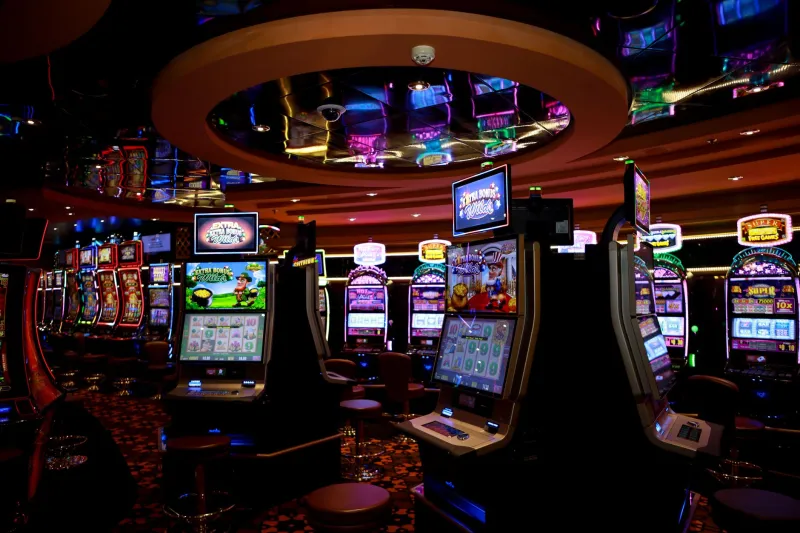
Photo by Photo by Mitchell Luo on Unsplash on Unsplash
You hit spin. The reels blur. A result appears in a fraction of a second. Simple, right?
Not even close.
Behind that single spin is a labyrinth of computational engineering, regulatory compliance, and deliberate design philosophy — all aimed at achieving something that sounds almost paradoxical: controlled unpredictability. The slot industry doesn't just want games to be random. It wants them to be random in ways that feel thrilling, stay legally defensible, and resist any attempt by players to reverse-engineer the outcome.
Welcome to the algorithm arms race.
What "Random" Actually Means in a Slot Game
Most players assume randomness is simple — the machine rolls the dice, you get what you get. But genuine randomness is surprisingly difficult to manufacture with software. Computers are deterministic machines. Left to their own devices, they follow rules. Rules produce patterns. Patterns are the enemy of a fair slot game.
This is where Random Number Generators — RNGs — come in. At their core, RNGs are mathematical formulas that produce sequences of numbers so complex they appear random, even though they're technically not. The industry term for this is pseudorandom. The sequences are seeded with constantly changing inputs — system clock data, hardware noise, player interaction timestamps — making them practically impossible to predict in real time.
The operative word being practically.
Why Developers Are Paranoid About Pattern Hunters
Here's where it gets interesting. Over the decades, a small but determined population of players and researchers has dedicated serious effort to finding exploitable weaknesses in RNG systems. Some have succeeded, at least partially.
In 2014, a group linked to a European hacking operation reportedly cracked the RNG code of a specific slot manufacturer's hardware by recording thousands of spins, running the footage through custom software, and identifying a repeating cycle in the number sequence. The exploit worked — for a while — until the manufacturer patched the algorithm and overhauled its seeding method.
That incident rattled the industry. Developers responded not just by improving their RNGs, but by layering in additional unpredictability mechanisms. Many modern slots now use hardware random number generators (HRNGs) that pull entropy from physical sources — thermal noise, radioactive decay measurements, even atmospheric interference. You can't reverse-engineer atmospheric noise from a video recording of a slot machine screen.
The Layers Nobody Talks About
Beyond the core RNG, modern slot architecture includes multiple additional systems that influence what you see without technically touching the randomness of the outcome itself.
Take weighted reel mapping. The RNG produces a number. That number gets mapped to a position on a virtual reel. But virtual reels can have hundreds of stops, while the displayed reel might show only twenty symbols. High-value symbols might appear on the virtual reel just once. Low-value symbols might appear forty times. The RNG is still producing random numbers. The mapping is what creates the experience of near-misses and frequent small wins.
Then there's volatility tuning. Developers deliberately engineer how wins are distributed over time. A high-volatility slot might go 200 spins without a significant payout, then deliver a massive hit. A low-volatility slot sprinkles small wins constantly. Both can have identical RTPs. The difference is pure experience design — and it's entirely intentional.
Players hunting for patterns are essentially trying to decode the mapping and volatility architecture, not the RNG itself. Which is why some are more successful than others — they're not cracking math, they're reverse-engineering design decisions.
The Regulatory Layer That Keeps Everyone Honest (Sort Of)
In the US, slot software — including online platforms — must be certified by independent testing labs like GLI (Gaming Laboratories International) or BMM Testlabs before it can legally operate in regulated markets. These labs verify that RNGs meet statistical standards for randomness and that the game pays out within its advertised RTP range over millions of simulated spins.
But certification isn't the same as perfection. Labs test what they're given. A sufficiently clever implementation could theoretically pass certification while still containing exploitable quirks invisible to standard testing protocols. This isn't a conspiracy theory — it's a known limitation that regulators actively work to close, and one reason why testing standards are updated regularly.
For players, the takeaway is practical: certified games from reputable platforms are genuinely fair in the aggregate. But "fair in the aggregate" and "predictable on any given session" are very different things.
What This Means for Your Next Spin
The arms race between RNG developers and pattern hunters has produced something genuinely remarkable: slot games that are, by almost any measure, the most rigorously random entertainment product ever created. The irony is that this hard-won unpredictability is precisely what makes them engaging.
Your brain craves pattern recognition. Slot games deny you a reliable pattern while teasing you with just enough structure — themes, sound design, near-misses — to keep that craving alive. The algorithm isn't working against you, exactly. It's working against your ability to predict it, which is the whole point.
Understanding this doesn't ruin the fun. If anything, it makes each spin a little more interesting. You're not just pulling a lever. You're engaging with one of the most sophisticated randomness engines ever built — one that an entire industry has spent decades making impossible to crack.
Spin accordingly.